People trust people
Make expert sources visible next to guidance.
UX RESEARCH · INFORMATION ARCHITECTURE · MOBILE PRODUCT DESIGN
A professional learning and problem-solving experience helping cleaners find practical, trustworthy guidance and know when to ask an expert.
CleanPeer combines search, structured learning, professional expertise and AI-assisted discovery in a single cleaner-first experience.
When a cleaner encounters an unfamiliar stain, material or chemical at work, scattered search results may not show which advice is credible or safe. The product problem is helping them understand the next action without making them guess whether a source is trustworthy.
I compared candidate journeys, including professional learning, mentorship and on-the-job troubleshooting. The unfamiliar-problem journey became the main design path. Sofia, a developing cleaner, is a provisional persona used to focus the concept—not a verified representative research result.
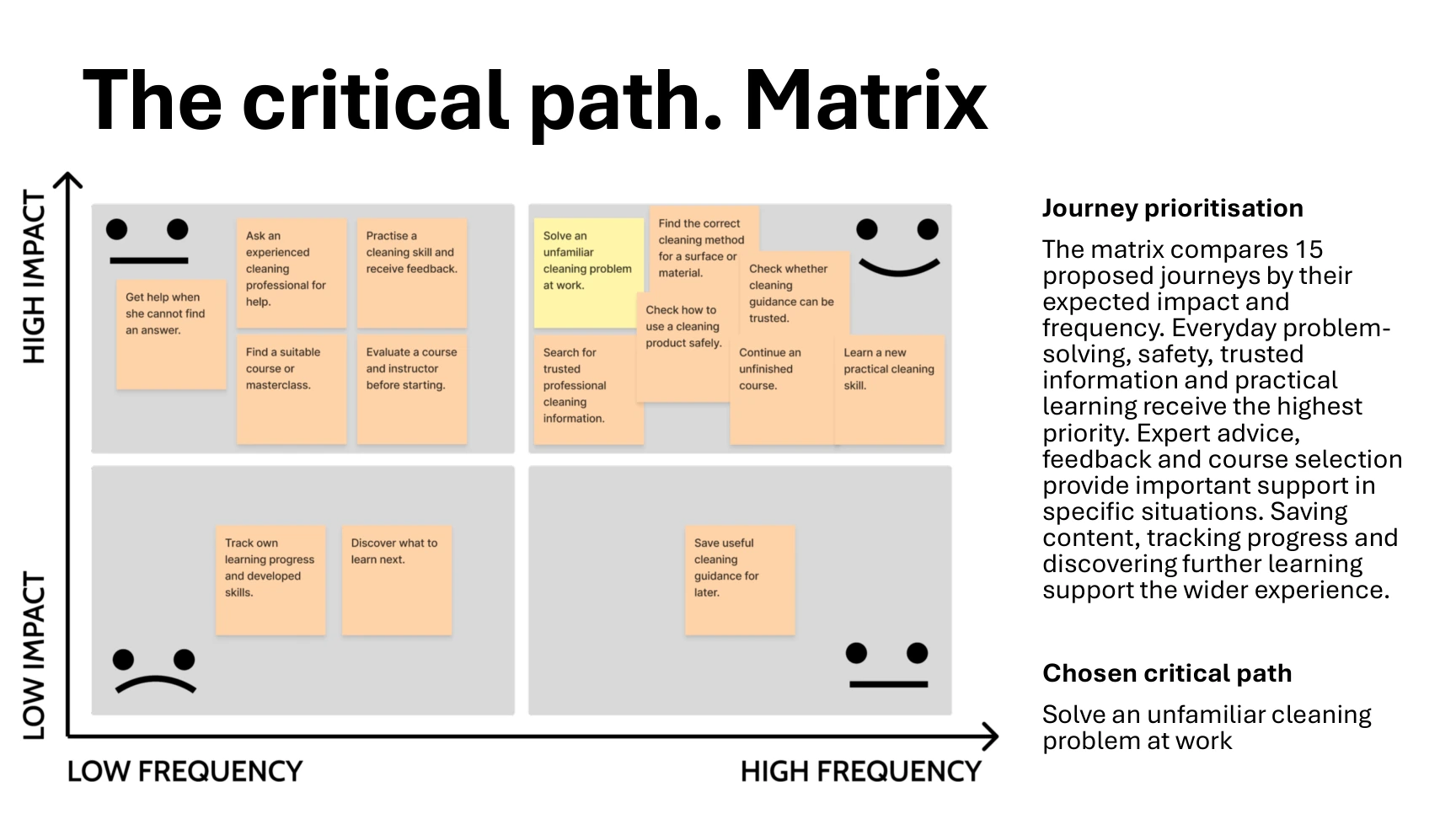
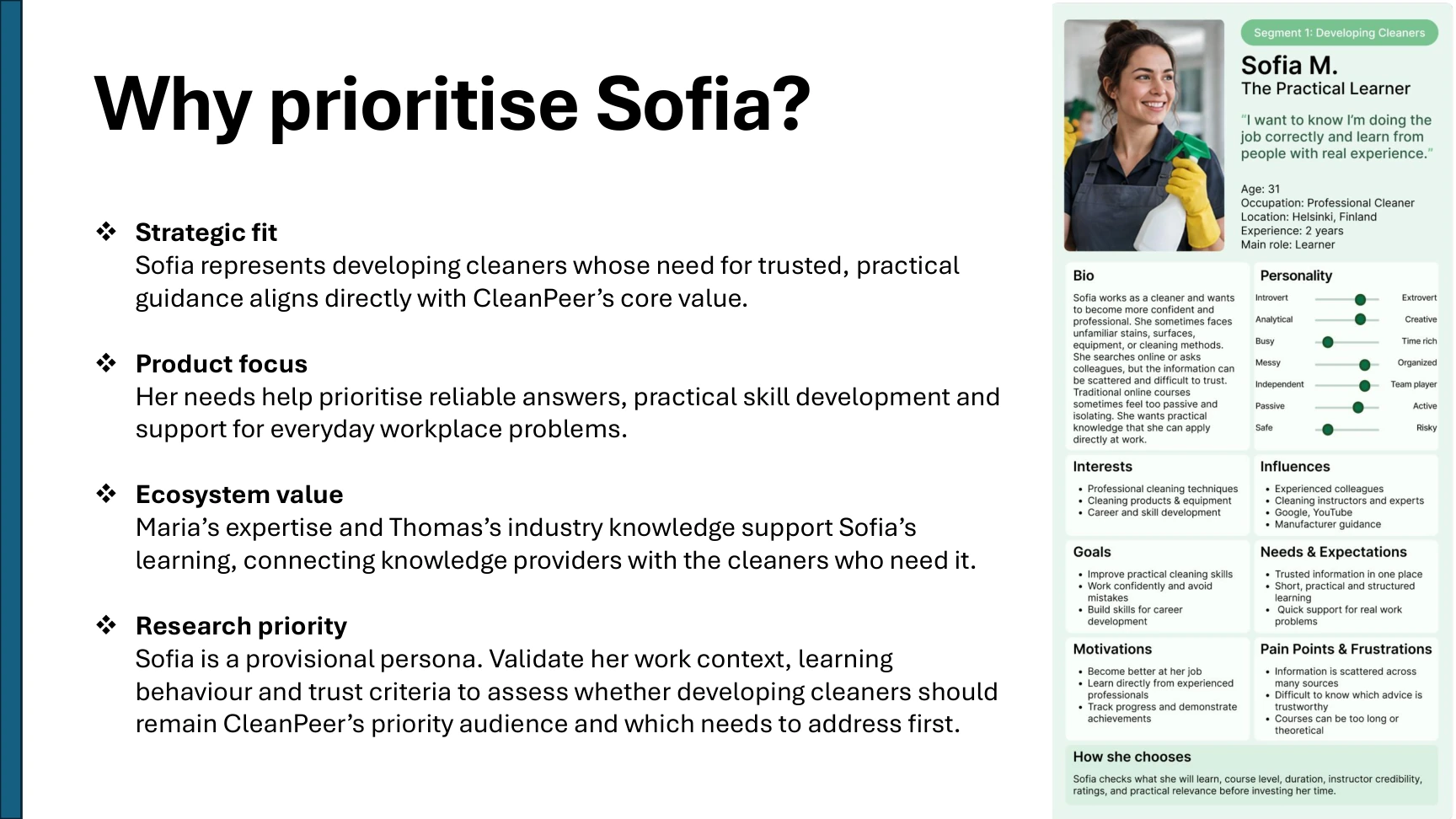
Make expert sources visible next to guidance.
Offer related knowledge after addressing an urgent task.
Help find and explain material while making verification and human escalation available.
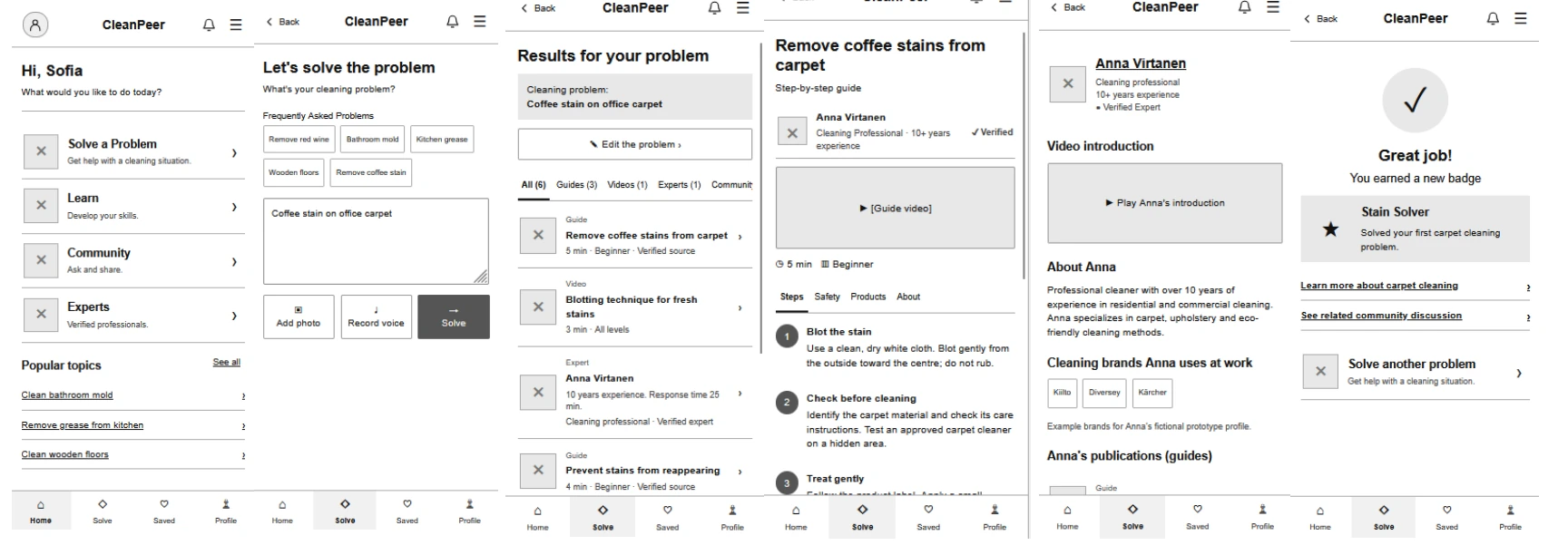
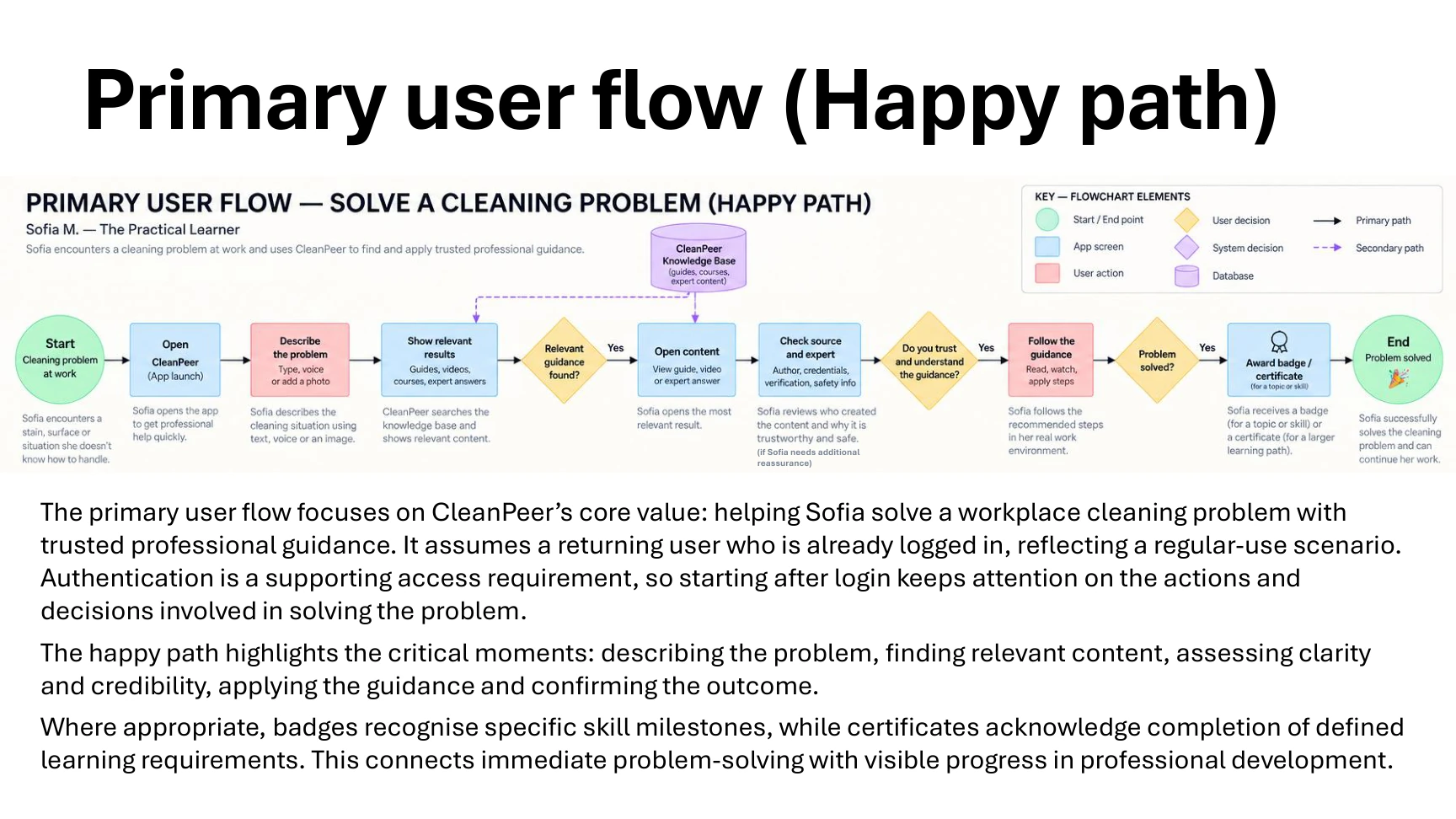
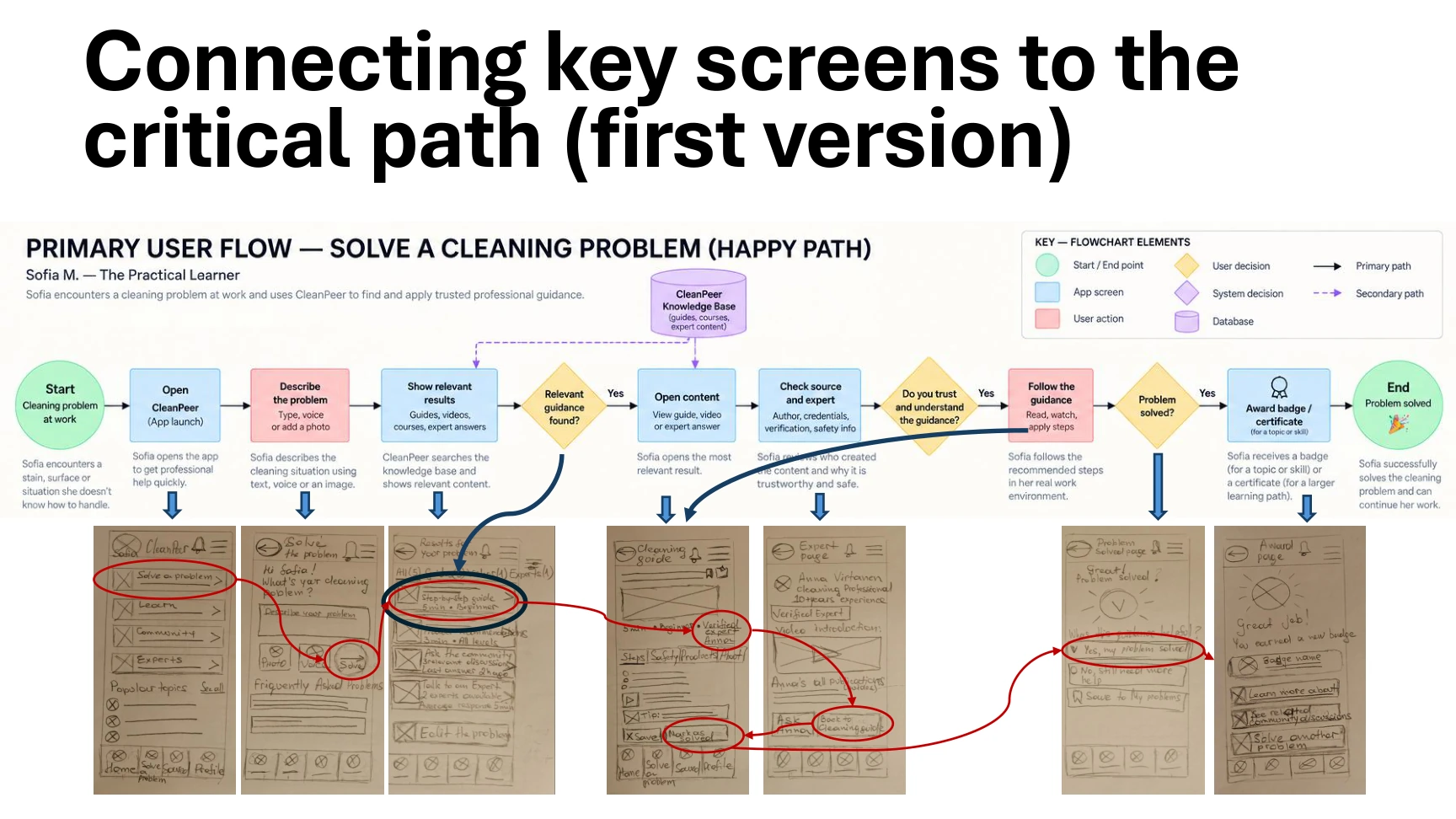
From describing a coffee-stain problem, Sofia can inspect results across formats, open a credited guide, check practical safety information and decide whether she needs expert support. Search, AI-assisted discovery and human routes remain available if the first answer is insufficient.
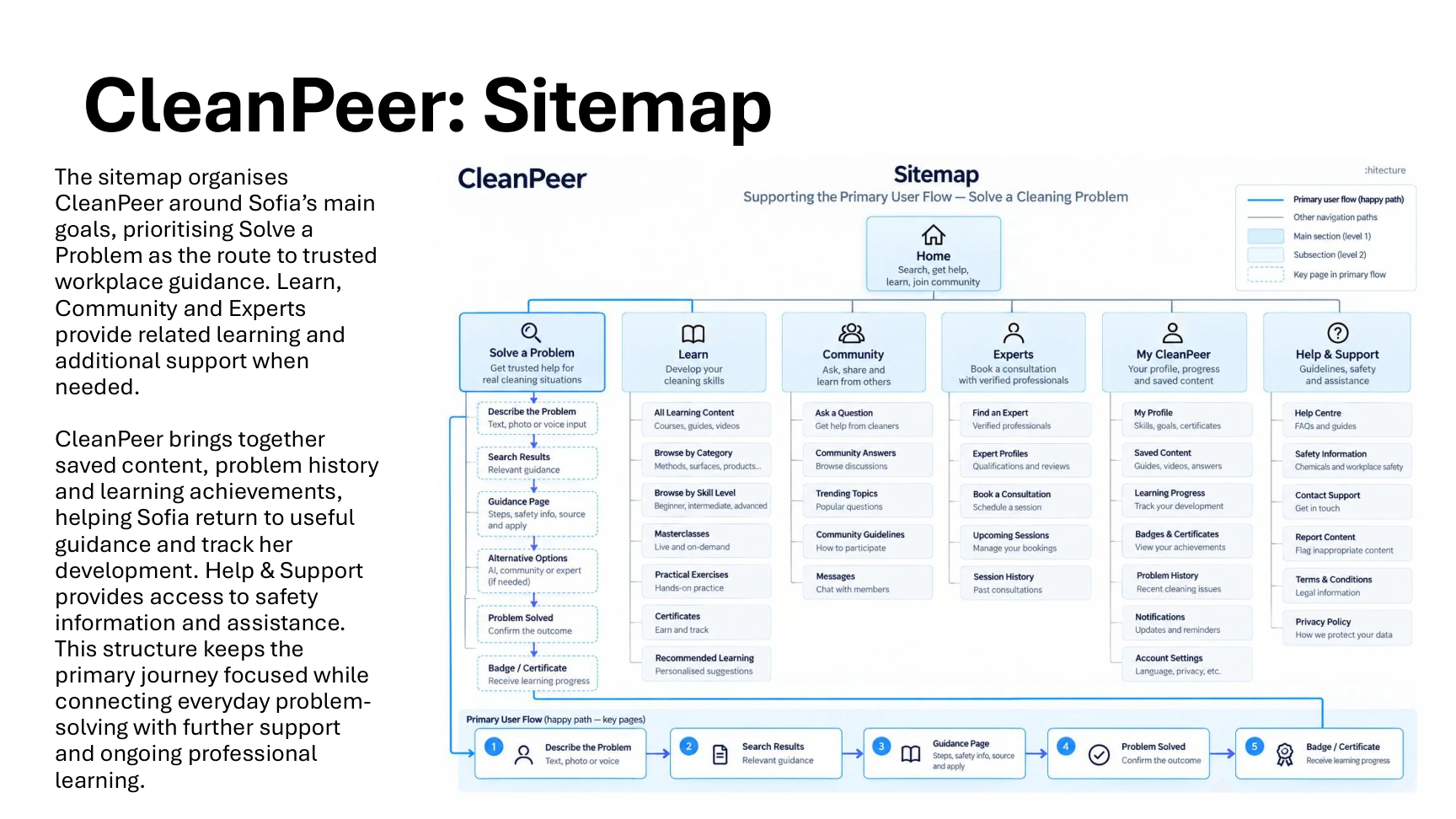
Paper sketches established information hierarchy before digital wireframes and the mid-fidelity interaction. The prototype keeps photo, text and voice options visible, distinguishes content types in results and provides a route to expert-backed advice.
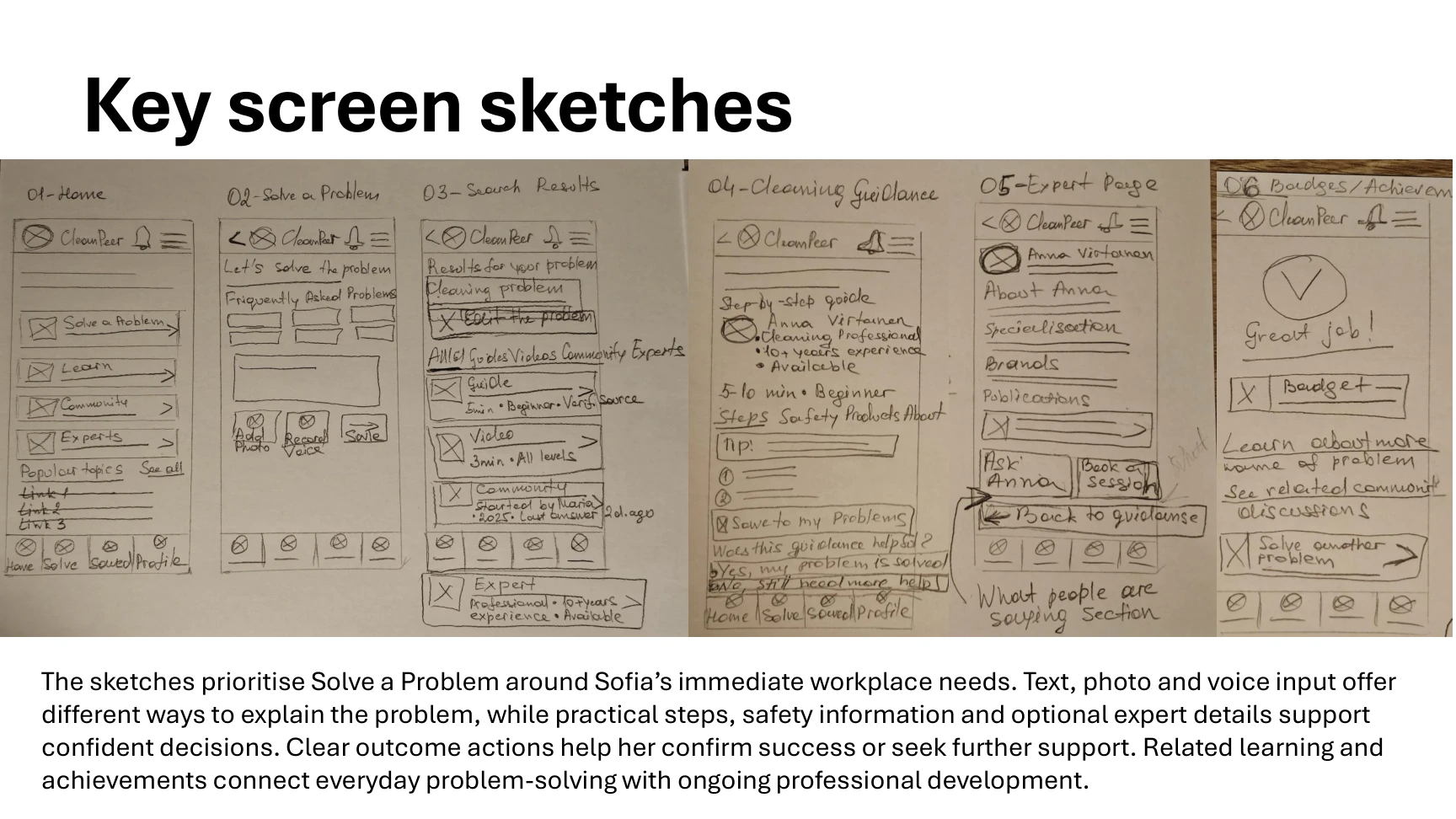
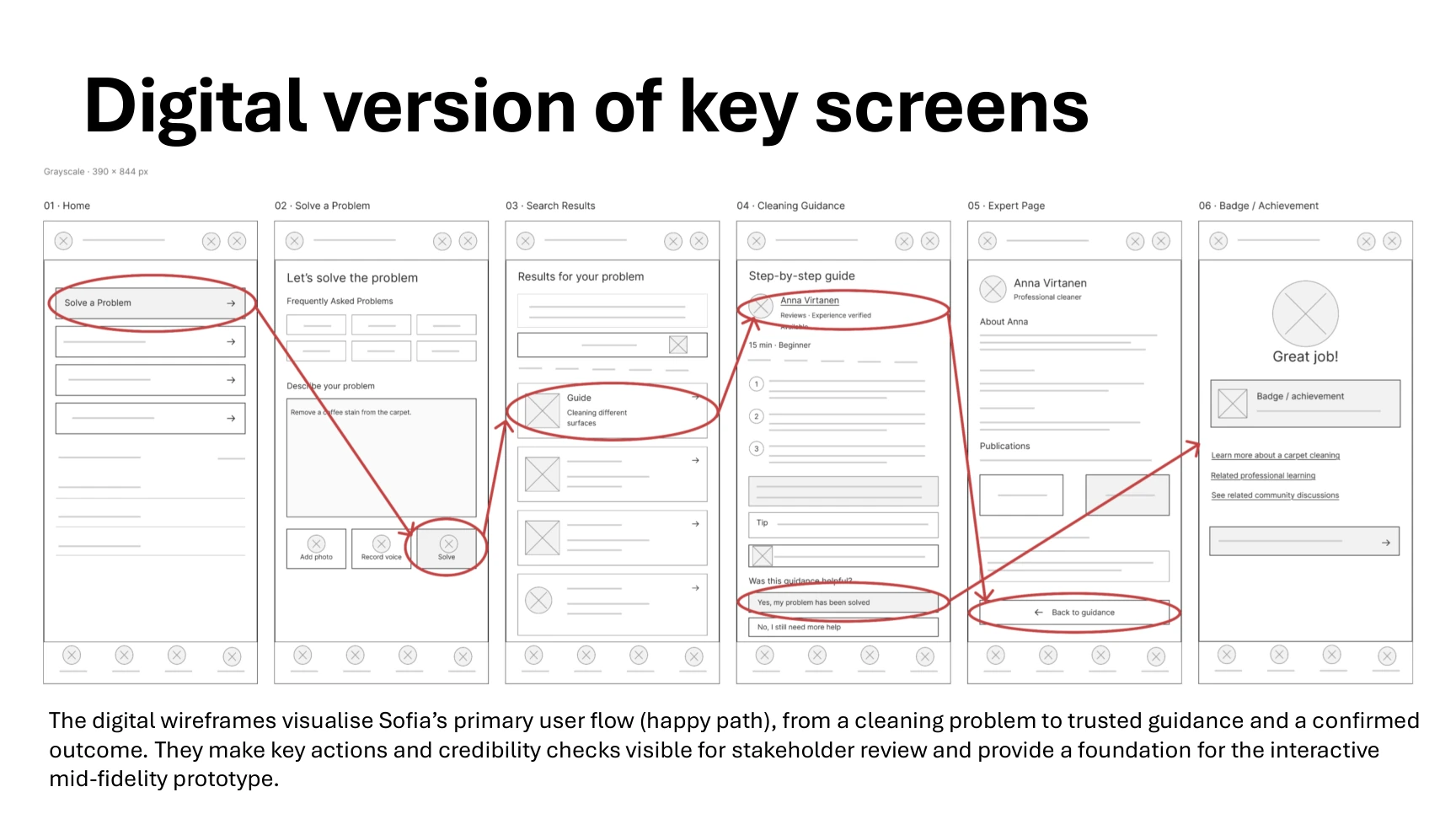
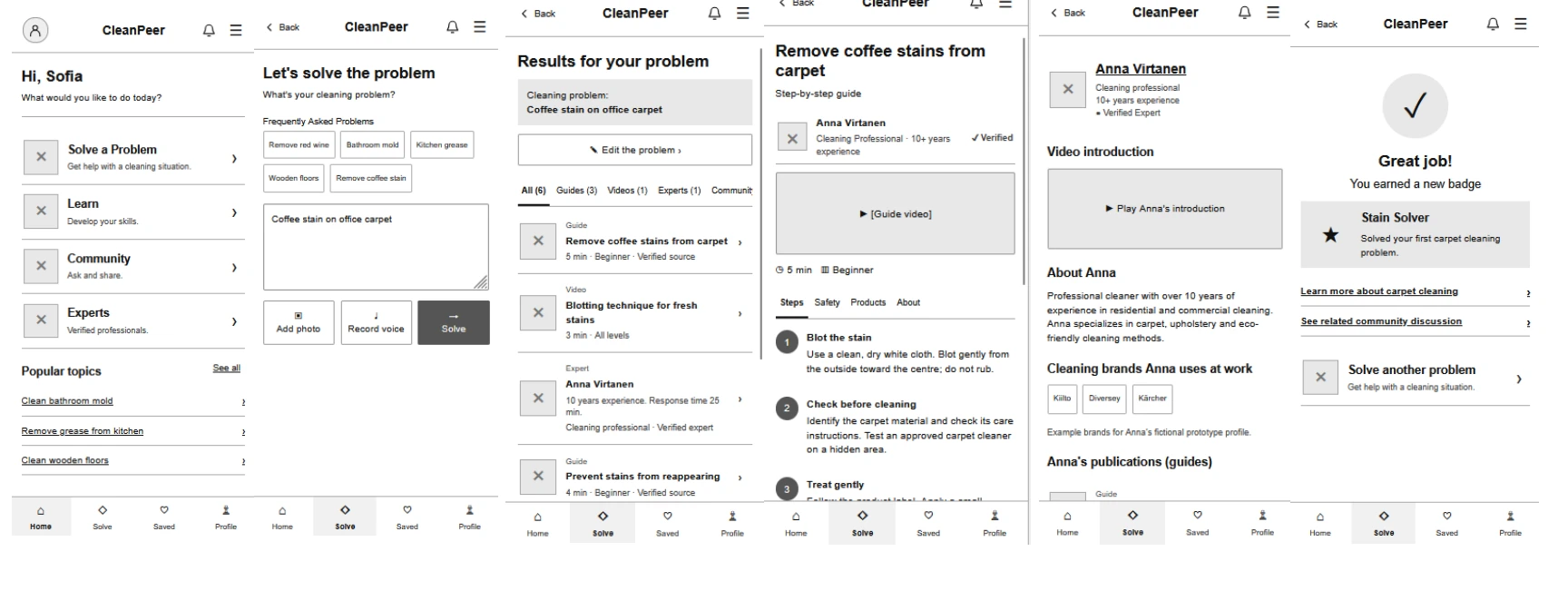
Describe a problem, review guidance and explore the expert route.
Open full-screen prototypePeer review and a prototype walkthrough revealed that adding a photo needs immediate feedback because users may show a stain before describing it in words. I revised the interaction to make attachment state visible and removable, and strengthened source visibility beside guidance.
The available evidence documents peer feedback and illustrative observations; it does not establish a representative live user study or measured product improvement. Next I would test the path with practicing cleaners.